Situated on the Bremer River, west of Brisbane, Ipswich, traditionally known as Tulmur, is a place whose history reflects the expansion of colonial settlement and the growth of Queensland. The lands and waterways of the region have long been cared for by the Jagera, Yuggera and Ugarapul Peoples, whose enduring connections to Country predate European occupation by many generations.
The European settlement that became Ipswich began in 1827, when Captain Patrick Logan, commandant of the Moreton Bay penal settlement, established an outstation at Limestone Hills. Convicts quarried limestone and burned lime for use in Brisbane, transporting it along the Bremer and Brisbane rivers. The discovery of valuable natural resources, particularly coal, would help transform this small outpost into an important centre of industry and commerce. Following the opening of Moreton Bay to free settlement in the early 1840s, the town grew as farmers, merchants and tradespeople arrived, while its river connections made it a gateway to the pastoral lands of the interior.
By the 1850s, Ipswich had developed into a prosperous and increasingly influential town. Mining, manufacturing and trade supported its growing population, while its position on routes linking Brisbane with the Darling Downs strengthened its economic importance. As the movement for Queensland's separation from New South Wales gathered momentum, Ipswich emerged as a serious contender for the capital of the proposed colony. Its growing commercial strength was accompanied by demands for greater local representation and control over municipal affairs. On 3 March 1860, Ipswich was proclaimed as a municipality, marking a significant step towards formal local government in the newly established colony of Queensland.
The Colonial Secretary's Correspondence offers a window into this period of transformation. Correspondence relating to Ipswich reveals how colonial authorities responded to the challenges of settlement, resource development, transport, public order, and local government. Through these records, the story of Ipswich becomes more than the growth of a regional town: it illuminates the competing ambitions, practical concerns and administrative decisions that helped shape colonial Queensland.
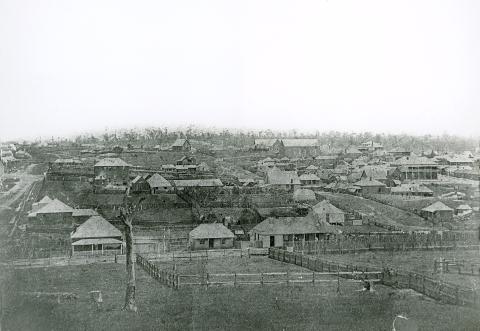
Centre for the Government of Queensland (2018) 'Ipswich', Queensland Places website, accessed 10 October 2026.
Harrison G (1910) Jubilee history of Ipswich: a record of municipal, industrial and social progress, Diddams, Brisbane.
Ipswich First (2023) 'How Ipswich became a city: celebrating our city's 163rd birthday', Ipswich First website, accessed 14 October 2026.
Ipswich First (2025) 'How Ipswich almost became the capital city of Queensland', Ipswich First website, accessed 10 October 2026.
Ipswich Libraries (n.d.) 'Ipswich history timeline', Ipswich Libraries website, accessed 10 October 2026.
Picture Ipswich (1860) 'Proclamation announcing the 'Municipality of Ipswich'', Picture Ipswich website, accessed 08 October 2026.
Red Gum, (26 May 1923) 'Glimpses of Ipswich History', Queensland Times, accessed 10 October 2026.
The Sydney Morning Herald (8 February 2004) ‘Ipswich’, The Sydney Morning Herald, accessed 10 October 2026.