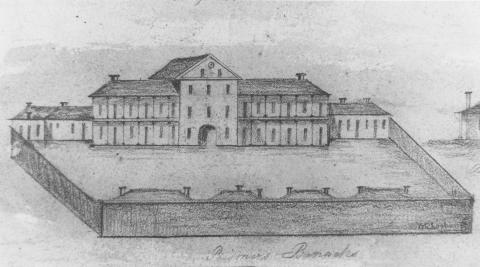
The Moreton Bay Penal Settlement was established as a place for re-offending convicts, a place of exile and punishment, and particularly harsh conditions. Treated more often with brutality and deprivation than compassion and consideration, convicts lived in an environment where they often felt helpless and hopeless.
In March 1826 Captain Patrick Logan, who had a reputation for harsh discipline, took charge of the settlement. He habitually worked prisoners in irons and was a relentless flogger. The severity of his approach was captured in the song 'Moreton Bay', with lyrics sometimes attributed to convict Francis MacNamara
I've been a prisoner at Port Macquarie, Norfolk Island and Emu Plains,
At Castle Hill and cursed Toongabbie, at all those settlements I've worked in chains;
But of all those places of condemnation, in each penal station of New South Wales,
To Moreton Bay I've found no equal: excessive tyranny there each day prevails.
For three long years I was beastly treated, heavy irons on my legs I wore,
My back from flogging it was lacerated, and often painted with crimson gore,
And many a lad from downright starvation lies mouldering humbly beneath the clay,
Where Captain Logan he had us mangled on his triangles at Moreton Bay.
Life at the Moreton Bay Penal Settlement
By 1828-1829 the viability of the Moreton Bay settlement was tested when a combination of factors combined to create more horrific conditions, including drought, poor and inadequate water supply, an inflated convict population, a diet lacking basic nutrients, and a severe punishment schedule, which saw the convict population decimated.
In this environment, however, there were voices that advocated for convicts and their rights, and one of them is compelling heard in the Colonial Secretary’s Correspondence.
A plea that went unanswered
John Joseph Therry was born in Cork, Ireland, in 1790 and ordained a priest in 1815. In 1820 he arrived in Sydney with Father Philip Conolly as one of the first two officially appointed Catholic chaplains in New South Wales. Catholics then faced legal restrictions and suspicion, and most of them were convicts, many of them Irish.
Therry made those convicts his priority. He travelled widely on horseback to reach the gaols, the hospitals, the chain gangs and the scattered farms where assigned servants worked. He attended condemned prisoners in their last hours, and for many of them he was the only person offering dignity or comfort. He also defended the right of Catholic convicts to worship freely.
In December 1830, when Therry heard of 2 convicts who were to be sent to Moreton Bay and executed he wrote to the Colonial Secretary to protest their transportation and the sentence that awaited them.
On the last page of the letter, which is often where comments or instructions from the Colonial Secretary were recorded, are the words, ‘No answer’. Therry’s pleas in this case were in vain, and the convicts were executed by hanging at the male convict barracks.
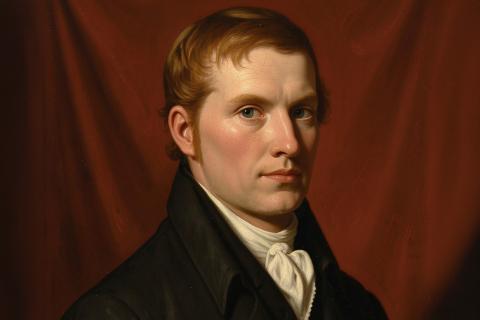
Catholic priest John Therry protests the harsh punishment of two convicts sentenced to execution at Moreton Bay, describing their treatment as cruel and illegal.
Eddy J (2006). 'John Joseph Therry (1790–1864)', Australian Dictionary of Biography, National Centre of Biography, Australian National University, accessed 20 November 2026.
Gleeson (2022) 'The recalcitrant priest', State Library of New South Wales website, accessed 20 November 2026.
Discover how a Catholic priest challenged the brutal treatment of convicts at Moreton Bay in 1830, only to have his plea for mercy go unanswered.